
Somewhere between 89% and 94% of marketers are now using generative AI inside their content workflows in 2026, and that single number explains why Google has sharpened its rules around thin, mass-produced pages. The 2026 Google generative AI content guidance draws a hard line between genuinely useful writing and “scaled, low-value” pages churned out with little human input, and getting on the wrong side of that line can quietly bury an otherwise good website.
Key Takeaways
| Question | Quick Answer |
|---|---|
| What counts as “scaled, low-value” content in 2026? | Pages generated in bulk (AI or otherwise) that repeat the same template with swapped location or product names and add no original insight. |
| Does Google penalise all AI-written content? | No. The 2026 Google generative AI content guidance targets unhelpful, mass-produced pages, not the use of AI tools themselves. |
| What is “low added value” content? | Content that copies or paraphrases existing sources without adding original data, opinion, or local detail. |
| How does this affect AI Overviews visibility? | Thin, templated pages rarely get featured; structured, specific, well-sourced pages have a better shot at appearing in AI Overview snippets. |
| Who is most at risk of scaled content abuse penalties? | Businesses publishing dozens of near-identical location or service pages, a common trap for agencies pricing content by volume rather than value. |
| Can small businesses compete against AI-generated bulk content? | Yes. Original, locally specific writing consistently outperforms generic scaled pages, which matters a lot for Australia small business SEO. |
| Where can I get help auditing my content? | A human copywriter familiar with SEO copywriting for AI Overviews can review pages line by line for genuine value. |
What “Scaled, Low-Value” Pages Actually Means in the 2026 Google Generative AI Content Guidance
Google’s updated guidance doesn’t ban AI writing tools. It bans the pattern of publishing many pages that exist purely to occupy search real estate rather than help anyone.
Think of a site with fifty “best plumber in [suburb]” pages that all say the same three sentences with the suburb name swapped. That’s the textbook definition of scaled content abuse under the 2026 rules.
The guidance groups this behaviour with other manipulative tactics like doorway pages and expired domain abuse. It treats volume-for-volume’s-sake as a signal of low added value pages, regardless of whether a human or a model typed the words.
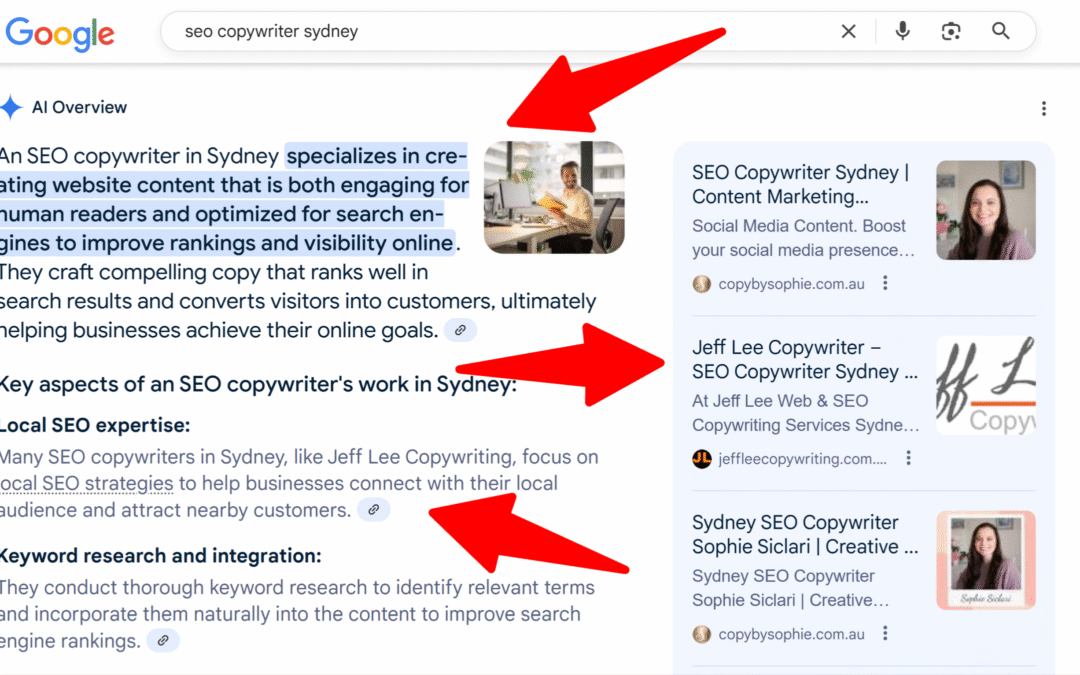
Google’s 2026 guidance zeroes in on sites publishing unhelpful, AI-scaled pages.
Why Google Is Cracking Down on Scaled Content Abuse This Year
Search results got noticeably noisier as generative tools made it cheap to produce thousands of pages overnight. Google’s response was to update its 2026 generative AI content guidance to reward originality and penalise repetition at scale.
This isn’t a minor tweak. It sits alongside broader shifts in how people find information, including AI Overviews now appearing in roughly 47% of Google searches according to recent industry analysis.
When almost half of searches surface an AI-generated summary above the usual results, the pages feeding those summaries need to be trustworthy and specific. Scaled, low-value pages simply don’t supply the raw material AI Overviews need to quote confidently.
Helpful content answers a real question with real detail. Scaled content answers a template with a filled-in blank.
Low Added Value Pages vs. Genuinely Useful Content
The gap between a low added value page and a genuinely useful one usually comes down to specificity. A generic page says “we offer great local service.” A useful page names the suburb, describes the actual client problem, and explains exactly how the work gets done.
We see this difference clearly across our own location pages. Our Woollahra copywriting page talks about the suburb’s proximity to the CBD and the specific needs of small retailers there, not a copy-pasted paragraph repeated across every suburb.
Compare that with our Bondi page, which references the local business mix and beachside customer behaviour rather than reusing the same three sentences. That distinction is exactly what the 2026 Google generative AI content guidance is asking every publisher to make.
SEO Copywriting for AI Overviews: Writing to Be Quoted, Not Just Ranked
Getting a page onto page one used to be the finish line. Now the real prize is getting quoted directly inside an AI Overview, which requires a different kind of writing discipline.
AI Overview optimisation rewards content that is structured, specific, and easy for a model to extract a clean answer from. Vague marketing language doesn’t quote well; precise, well-organised paragraphs do.
Our AI Overview optimisation service focuses on exactly this: structured headings, high-quality supporting visuals, and clear local relevance so AI systems have something worth summarising. Businesses that skip this step and rely on scaled templates tend to disappear from these new results entirely.
A Practical Checklist to Avoid Scaled, Low-Value Pages
We use a simple internal checklist before publishing any new page, whether it’s a service page or a location-specific piece. It keeps every page on the right side of the 2026 Google generative AI content guidance.
-
Original detail: Does the page include a fact, example, or local reference that no other page on the site repeats?
-
Clear purpose: Could a reader explain in one sentence why this specific page exists?
-
Human review: Has a person actually edited the draft, not just skimmed it?
-
Depth over duplication: Is the content longer and more useful than simply swapping a place name into a template?
-
Structured formatting: Are headings, lists, and short paragraphs used so both readers and AI systems can parse it easily?
One data point worth remembering here: roughly 20% of any piece of content, whether it’s the original data, the design, or the central hook, tends to drive 80% of its actual value. Scaled, AI-only workflows routinely skip that 20% because it’s the hardest part to automate.
Did You Know?
89 to 94% — The percentage of marketers actively using generative AI in content creation workflows by 2026.
Source: sitecentre®
Local Content Done Right: Lessons from Sydney and Australia Small Business SEO
Local pages are where scaled content abuse shows up most often, because it’s tempting to write one template and duplicate it across every suburb a business serves. We take the opposite approach for every Sydney location we cover.
Our Manly page talks about supporting the local community and driving genuine engagement rather than generic promises. The Concord page covers the specific role a local copywriter plays for businesses trying to stand out in that suburb, not a copy-paste of the Manly content with a new name dropped in.
This matters enormously for Australia small business SEO, because small operators can’t compete on raw content volume against larger companies. They win by being unmistakably specific about their own suburb, their own customers, and their own story, which is precisely what scaled, low-value pages can never offer.
Building a Content Workflow That Scales Without Becoming “Scaled Content Abuse”
Scaling content responsibly is still possible in 2026. The trick is separating the parts of the process that can be automated from the parts that genuinely need a person.
Research, structure, and keyword mapping can be sped up with AI assistance. But the final read-through, the local knowledge, and the editorial judgment about what actually matters to a reader still need a human hand.
Our Hurstville page shows this balance in practice. It uses local research to identify what actually matters to that community, then a human writer shapes it into something worth reading, not just a template with a new suburb name.
Did You Know?
Just 20% of a page (the original data, design, or hook) often drives 80% of its real value, the exact 20% that scaled, AI-only workflows tend to skip.
Source: Semrush
Signals That Tell Google Your Content Isn’t Scaled or Low-Value
Beyond original detail, a few structural signals help pages avoid being flagged as low added value. Author information, clear local expertise, and consistent formatting all reinforce that a real person stands behind the page.
We include background on our own experience on our about page, and we back up location content with structured markup through resources like our local schema sample. Both signal to Google, and to AI systems reading the page, that the content is grounded in a real business rather than generated on autopilot.
These signals matter more as AI-generated volume grows across the web. With traffic from AI engines like ChatGPT growing by as much as 123% for small and mid-sized business sites between recent years, standing out with clearly authored, specific content has become a genuine advantage rather than a nice-to-have.
Applying This to Australia Small Business SEO in 2026
Small businesses across Sydney and the rest of Australia are in a strong position here, if they play to their strengths. A local plumber, café, or clinic has access to specific, first-hand detail that no AI-generated template can replicate at scale.
We’ve applied this thinking across suburbs including Ryde, Rose Bay, and Sutherland, where each page reflects the specific character of that community rather than a repeated formula.
The same applies to Wentworthville and Westmead, where local business needs differ enough that a single template simply wouldn’t hold up under the 2026 Google generative AI content guidance. Businesses that invest in this kind of specificity now are building content libraries that survive future updates rather than needing constant rewrites.
Conclusion: Staying on the Right Side of the 2026 Google Generative AI Content Guidance
Avoiding scaled, low-value pages in 2026 isn’t about rejecting AI tools altogether. It’s about making sure every page, whether AI-assisted or fully hand-written, offers something a reader genuinely couldn’t get anywhere else.
The 2026 Google generative AI content guidance rewards specificity, local relevance, and clear human oversight, and penalises volume for its own sake. If you’d like a hand reviewing your own site for scaled content abuse or low added value pages, our team is happy to talk through what we find via our contact page.
Frequently Asked Questions
What is considered “scaled, low-value” content under the 2026 Google generative AI content guidance?
It refers to pages produced in bulk, often with AI tools, that repeat the same structure with minimal changes and add no original insight for the reader. The 2026 Google generative AI content guidance flags this pattern regardless of whether the words were written by a person or a model.
Will using AI writing tools automatically get my site penalised?
No, the guidance targets unhelpful mass production, not AI assistance itself. A page written with AI help but reviewed, edited, and enriched with original local detail is treated very differently from a templated page dumped online at scale.
How do low added value pages affect visibility in AI Overviews?
Thin, templated pages rarely get pulled into AI Overview summaries because there’s nothing specific to quote. Well-structured, detail-rich pages have a much better chance of being featured, which is central to good SEO copywriting for AI Overviews.
Is location-based content automatically considered scaled content abuse?
Not if each page includes genuinely different, locally relevant information rather than a copy-paste template. The difference between useful local pages and scaled content abuse comes down to whether real local detail and human editing went into each one.
How does this guidance specifically affect Australia small business SEO?
Small businesses often have an advantage because they hold first-hand local knowledge that’s hard to fake at scale. Investing in genuinely specific content, rather than generic templates, helps small operators stand out under the 2026 Google generative AI content guidance.
What’s the difference between “low added value” and “scaled” content?
Low added value describes content that copies or paraphrases existing sources without contributing anything new. Scaled content abuse describes the practice of publishing many such pages at once, so the two terms often overlap but aren’t identical.
Is it worth hiring a copywriter instead of relying fully on AI in 2026?
For most businesses, yes, because a human editor catches the gaps that make AI drafts feel generic and helps content meet the 2026 Google generative AI content guidance. Combining AI-assisted research with human judgment tends to produce pages that are both faster to create and genuinely useful to readers.